
MOIRA BATEMAN
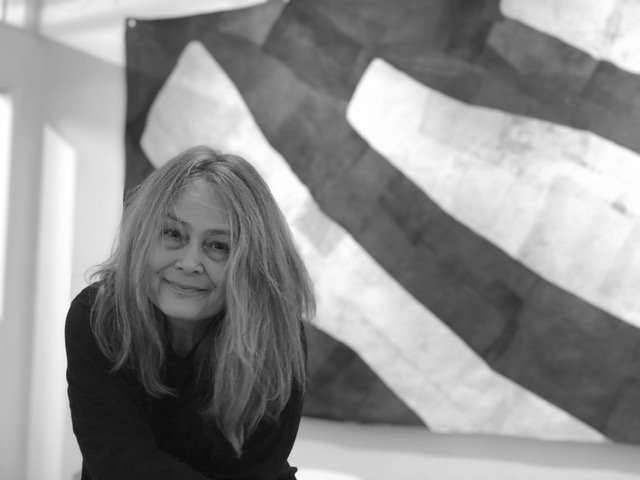
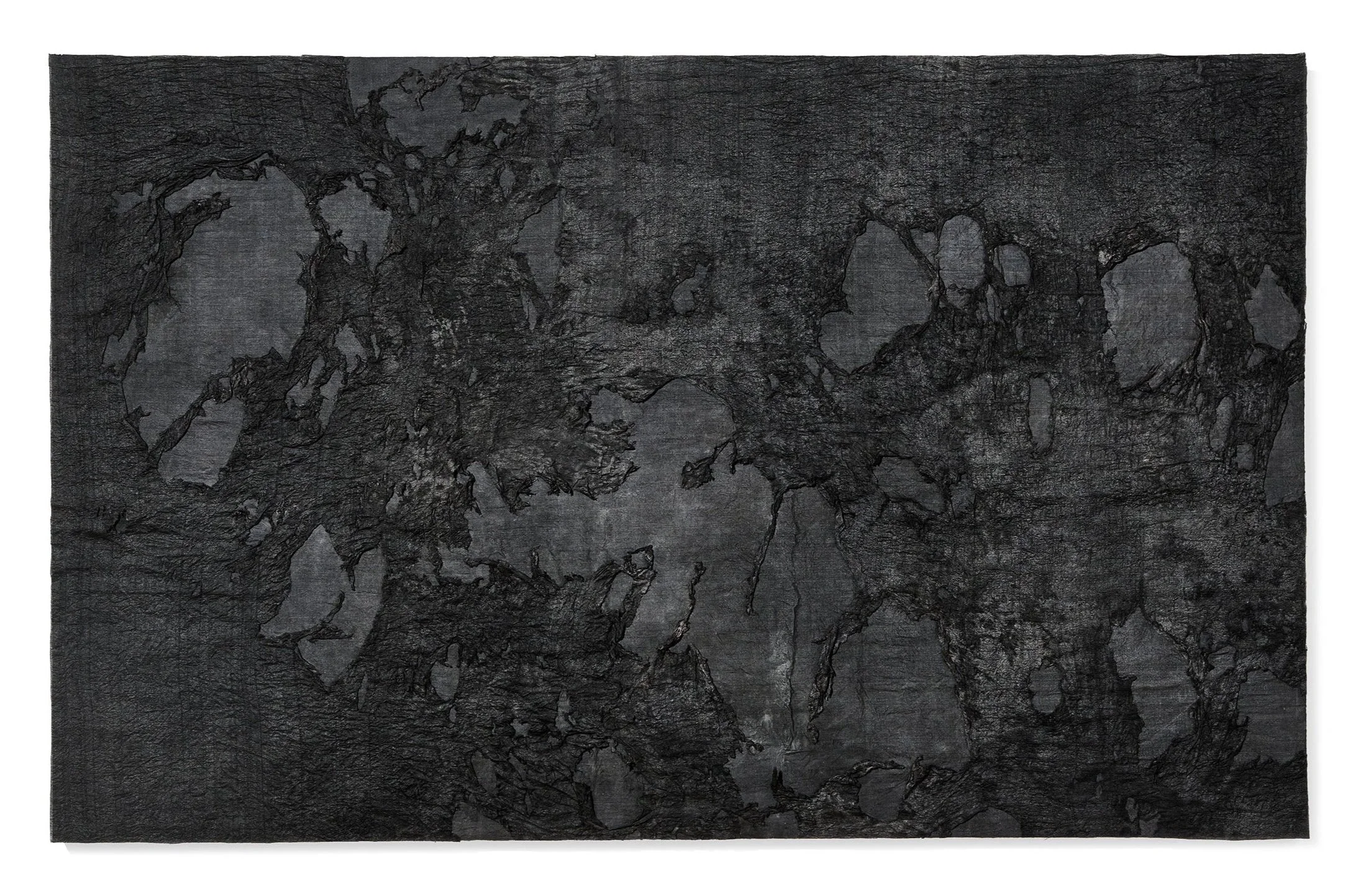
Moira Bateman works across textile, mixed media, and large-scale installation, she is best known for works made in direct collaboration with natural ecosystems: migrations of cloth through rivers, bogs, and sea that allow water, sediment, tide, and fermented mineral mud dye to inscribe themselves into the cloth over months and years. The resulting works carry the chemical and physical signatures of specific waterways; dark abstractions that contain material memory while becoming a kind of depiction of place.
Bateman's practice proceeds from a lifelong belief that the natural world holds value and agency independent of human perception. Water, sediment, and weather are her coauthors. Her major bodies of work include Bog Etudes (2023), a six-panel immersive installation of bog-dyed silk at monumental scale; Sund (Notes From the Sea) (2025), which brings together mud cloth works and Seadrift pieces made from sea-weathered fisheries plastic recovered in Hardangerfjord, Norway; and By Way of Water (2019), a solo installation presented at the Bowery Gallery in New York. Her processes unfold at ecological and seasonal timescales, submitting to natural forces rather than the pace of human making. Cloth, in her work, becomes a form of memory: porous, accumulative, and changed by what it has passed through.
Bateman holds a Master of Landscape Architecture from the University of Minnesota, and her early work in native plant community reclamation informs her ongoing attention to ecosystems as complex, interdependent systems. She is a recipient of the McKnight Foundation Fiber Artist Fellowship (2022), the Minnesota State Arts Board Visual Artists Initiative Grant (2014), and the Jerome Foundation Textile Fiber Artist Project Grant (2013). Residencies include Art Omi (Ghent, NY, 2024) and Kunstnarhuset Messen (Ålvik, Norway, 2024). Exhibitions have been held at Form+Content Gallery, Minneapolis (2025, 2023); Textile Center, Minneapolis (2023); Bowery Gallery, New York (2019); and Minnesota Marine Art Museum, Winona (2016), among others. Her work is currently held and has been exhibited internationally at Galleri Semmingsen, Oslo, Norway, and has been shown at The Integral Museum of Akademgorodok, Siberia.